- Home
- Stroke Clinics
- Butterfly
Butterfly
Coaching Clinic
A specialist 2-hour Butterfly technique clinic. One stroke, one session, real change. Max 8 swimmers, Borehamwood — launching soon, join the waiting list.
What the Butterfly
clinic fixes
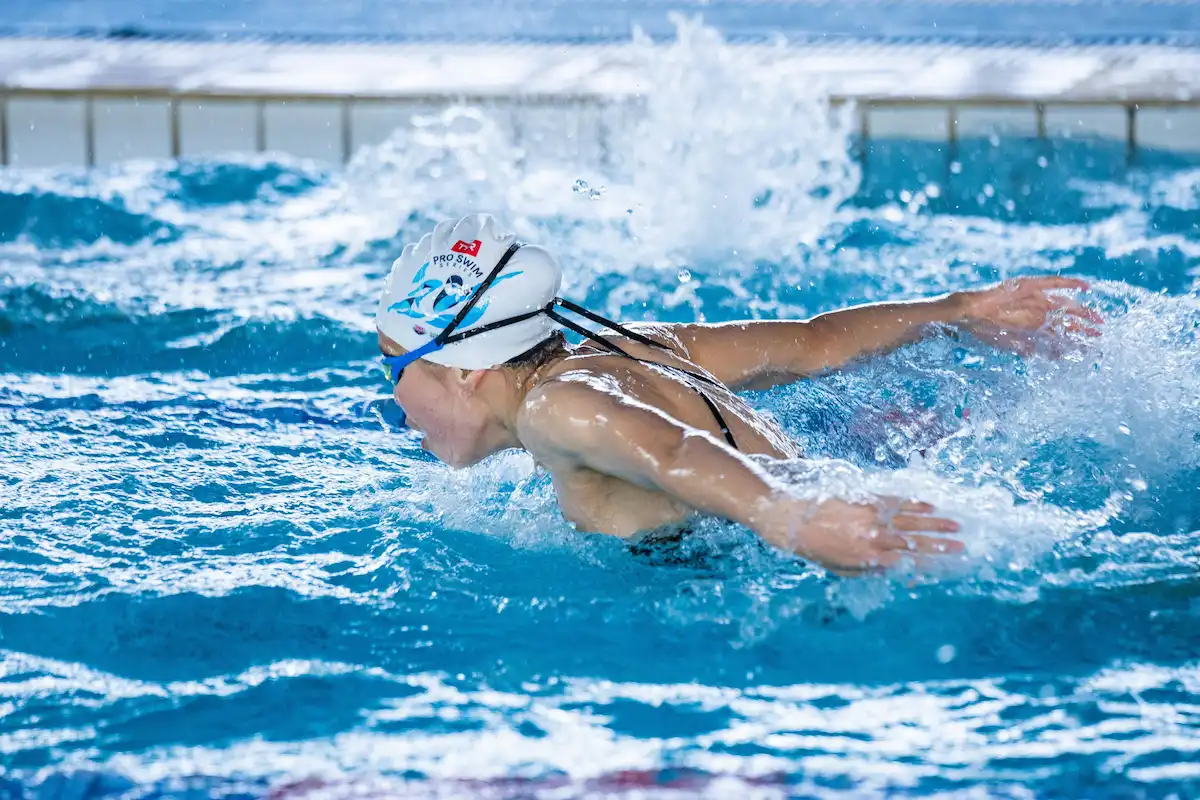
Most swimmers treat butterfly as a test of strength. It isn't — it's a timing problem. When the body wave and the kick work together, butterfly becomes rhythmic and sustainable rather than a desperate fight to the wall.
This clinic teaches you to work with the stroke instead of against it. We rebuild the rhythm from the chest down, so fly stops being the stroke you survive and becomes one you can actually hold together.
Join the waiting list →£55 per swimmer
Inside the
Butterfly clinic
Every minute is spent on the technical detail that makes the biggest difference — with precise, individual poolside feedback throughout.
Undulation and body wave
Initiating the wave from the chest, not the hips — developing the rhythm that powers the whole stroke and makes butterfly feel fluid.
Double-kick timing
The first kick on entry, the second on exit. Most swimmers are on the wrong timing, which is exactly what makes fly feel impossibly hard.
High-elbow catch and pull
The catch that generates a powerful pull in a stroke that punishes a weak entry — early vertical forearm, applied to butterfly.
Breathing position
Breathing forward and low so the hips don't drop and the undulation survives the breath — the moment most fly stalls.
Rhythm and tempo
Holding a repeatable rhythm rather than sprinting two strokes and stalling — the key to swimming fly that lasts more than half a length.
Turns and breakout
Two-hand touch mechanics, a tight turn and the underwater dolphin distance that sets up your first stroke off the wall.
The habits costing
you time
- Kicking from the knees instead of driving from the core
- One big kick instead of the two-kick rhythm
- Lifting the head and chest too high to breathe
- Pulling with the arms only, with no body wave behind it
- Breathing late, which collapses the timing of the whole stroke
Drills you can
take home
How we build the stroke
Fly falls apart when it's swum as a strength event, so the drills rebuild it as rhythm. Body-wave and dolphin-kick work to find the undulation, single-arm and 3-3-3 to fix the timing of the second kick, and breathing drills that stop the head lifting and killing the front end. Short, precise sets with feedback every length — and the drills that let you keep the shape when you're tired.
Who the Butterfly
clinic suits
Club swimmers
Sustainable, race-legal butterfly built on timing — so you can hold technique to the wall rather than falling apart in the back half.
IM swimmers
Fly is the first leg of the medley and sets up the whole race. A more efficient fly leaves more in the tank for the other three.
Adult improvers
Learn to swim a relaxed, rhythmic butterfly for the first time — it is far more achievable than it looks once the timing clicks.
Related coaching
& clinics
Butterfly clinic
FAQs
I find butterfly exhausting — can it really be easier?
Yes. Exhaustion in fly almost always comes from fighting the stroke with strength instead of timing. Once the body wave and double kick line up, butterfly becomes far more sustainable.
Do I need to be strong to swim butterfly well?
Far less than you think. Butterfly rewards timing and rhythm over raw power. The clinic is built around teaching that timing, not building strength.
Is butterfly realistic for an adult improver?
Absolutely. Plenty of adults learn a relaxed, rhythmic fly once they stop muscling it. We start with short, controlled repeats and build the rhythm from there.